Mirrors Engineered for Long-Term Stability
Our installation process is carried out with controlled alignment, substrate verification, and industry-grade fixing methods to ensure every mirror performs safely and accurately in its environment.
Key Technical Advantages
- Alignment mapped to exact level and plumb tolerances
- Structural adhesives and fixing systems selected per substrate
- Controlled panel placement to prevent stress points or flex
- Seamless jointing for multi-panel mirror walls
- Full compliance checks against safety and environmental requirements
Our Installation Process
At Mirrorworld, we take pride in providing a seamless and professional commercial mirror installation experience from start to finish. Our process is designed to ensure accuracy, efficiency, and a flawless final result. Here’s how we make it happen:
We first visit your premises to assess the wall's structure and take accurate measurements.
Book a Date

We then fabricate your bespoke mirrors using premium glass and materials.
See Process

Finally, our team returns to install your mirrors, delivering a clean, seamless finish.
Arrange
What Our Installation Process Includes
On-Site Preparation & Substrate Verification
Before any panels are positioned, the installation team verifies substrate conditions identified during the survey. This includes assessing wall rigidity, surface flatness, moisture levels (where relevant), and compatibility with the specified fixing system. Any deviations from expected conditions are documented and addressed prior to installing the first panel.
Level, Plumb & Alignment Mapping
Using laser sights and calibrated alignment tools, we establish horizontal and vertical reference lines across the installation area. This mapping defines:
- Primary datum lines
- Panel alignment centres
- Joint spacing requirements
- Tolerance allowances for multi-panel assemblies
This ensures all panels are installed in controlled relation to one another rather than relying on existing wall, ceiling, or floor levels—which are often imperfect.
Application of the Selected Fixing Method
Fixing methods are applied according to substrate type, environmental conditions, and mirror thickness. These may include:
- 40mm Screws, Caps & Grommets
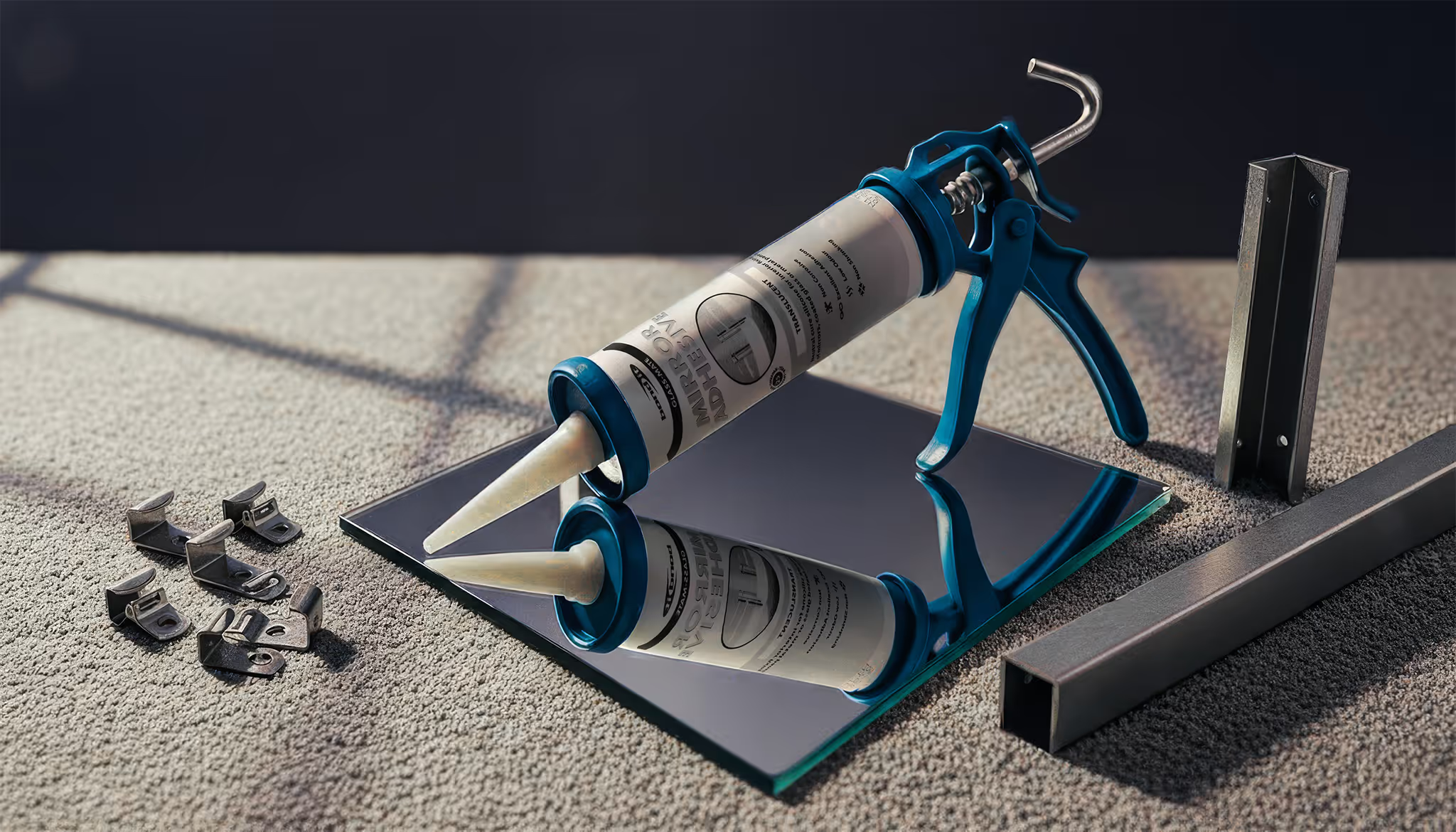
- Specialist Mirror Adhesive
- Aluminium J-Clips
- Aluminium J-Channels
Panel Placement & Stress Management
Mirrors are lifted, positioned, and seated using suction lifters and controlled handling techniques. During placement, technicians monitor:
- Flex along the mirror’s neutral axis
- Pressure distribution across the adhesive bed
- Contact uniformity between mirror and substrate
- Avoidance of overstressing thin or large-format panels
This ensures the mirror bonds evenly without inducing micro-fractures or distortions.
Jointing & Seamless Alignment Across Multi-Panel Mirrors
For multi-panel mirror walls, each panel is aligned to millimetre tolerance relative to adjacent sections. This includes:
- Joint gap consistency
- Flushness across panel boundaries
- Optical alignment to avoid distortion at seams
- Controlled compression of adhesive where relevant
Where near-invisible joints are required, precision spacing tools and alignment clips are used to maintain uniformity during curing.
Safety Checks & Compliance Verification
Once panels are seated, we perform safety checks that may include:
- Verification of correct fixing system use
- Safety backing inspection
- Impact-risk area evaluation
- Moisture-susceptibility inspection in wet zones
- Confirmation of compliance with specifications such as BS EN 1036
These checks ensure the installation meets regulatory and environmental requirements before completion.
Final Cleaning & Visual Inspection
After installation is complete and adhesives have been secured, the mirror surface and edges are cleaned using non-reactive agents. A visual inspection is conducted to verify:
- Optical clarity and absence of distortion
- Clean, uniform joints
- No surface defects or handling marks
- Proper seating along adhesive or mechanical supports
The installation is only signed off once the mirror meets all visual and structural expectations.
Installation for Different Environments
Each commercial environment presents specific mechanical, safety, and environmental conditions that influence how mirrors must be installed. Our installation methods are adapted accordingly to ensure correct fixing performance, long-term stability, and full compliance with relevant standards.
Gyms & Studios
Gyms, fitness centres, and performance studios subject mirrors to vibration, impact risk, and continuous activity. Installation in these environments prioritises:
- High-strength mirror adhesive for vibration-resistant bonding
- J-channels or J-clips to provide uniform lower support
- Alignment tolerances tightened to ensure clean optical continuity across large mirrored walls
- Avoidance of penetrations unless absolutely necessary (to prevent stress points)
- Strict safety-backing requirements due to proximity to users
These measures ensure mirrors remain stable despite repeated vibration and high footfall.
Hotels & Hospitality
Hotel mirrors must balance visual quality with environmental durability, particularly in guest bathrooms and spa areas:
- Foil-backed mirrors or moisture-safe systems for steam and humidity
- Adhesive bonding on stable substrates to avoid visible fixings
- Precision alignment for design-led spaces with continuous reflective surfaces
- J-channels where additional bottom support is required
Aesthetic finish is a priority, so installation is performed with strict attention to visible edges and joints.
Retail & Changing Rooms
Retail mirrors must withstand constant public interaction while maintaining accurate reflection:
- Polished edges installed visibly without frames
- Adhesive or channel installation depending on substrate strength
- Safety-backed mirrors due to public access
- High optical accuracy verified post-installation
Changing rooms often require seamless mirror lines to maintain consistent visual representation of garments.
Corporate Spaces & Commercial Interiors
Corporate interiors frequently involve architectural cladding, partition systems, or recessed designs:
- Laser-mapped alignment to integrate mirrors into existing wall systems
- Adhesive bonding for clean, minimalistic finishes
- J-channels for long or heavy panels requiring structural support
- Joint uniformity checks for multi-panel feature walls
These installations emphasise precision and integration with surrounding materials.
Bathrooms, Spas & Humid Environments
High-humidity environments require specific materials and installation precautions:
- Foil backing or moisture-resistant backing systems
- Approved mirror adhesive that will not compromise mirror silvering
- Sealants compatible with mirror substrates where necessary
- Support channels when panel weight or moisture exposure increases load risk
Moisture resistance and long-term adhesion are the primary concerns here.
Public Buildings & High-Traffic Facilities
In schools, leisure centres, healthcare facilities, and similar spaces, installations must meet strict safety expectations:
- Premium safety backing for enhanced impact resistance
- Mechanical fixings (screws, caps & grommets) where positive retention is required
- Adhesive + channel hybrid installations for added reliability
- Regular alignment checks for large-format or multi-panel configurations
Compliance and durability take priority due to public use and elevated impact likelihood.
Handling, Transport & Site Logistics
This section is written to match the tone and structure of your manufacturing and installation pages.
Handling, Transport & Site Logistics
The safe movement of mirror panels—from fabrication to final placement—requires controlled handling procedures, specialised packaging, and careful planning. Our logistics process is engineered to minimise stress, prevent edge damage, and ensure large-format mirrors can be manoeuvred safely through the installation environment.
Protective Packaging & Transport Stability
All mirrors are prepared for transport using packaging systems designed specifically for fragile, reflective substrates:
- Corner protectors to safeguard arrissed or polished edges
- Foam or felt membrane layers to prevent abrasion and silvering damage
- Rigid backing boards where panels require additional structural support
- Secure racking systems inside transport vehicles to prevent flex or vibration
Transport is carried out using vehicles capable of maintaining upright orientation to reduce stress and avoid pressure points.
Safe Handling Protocols & On-Site Manoeuvring
Mirror panels—especially large-format units—require controlled handling using appropriate lifting and support equipment. Our installation teams employ:
- Professional-grade suction lifters for stable grip and reduced manual handling stress
- Two-person or multi-person lift protocols depending on panel size and thickness
- Edge protection during all lifting stages to avoid micro-chipping
- Restricted handling procedures to prevent flexing or torsion during movement
Handling is always performed in alignment with manufacturer and industry safety guidelines for glazed materials.
On-Site Access Assessment & Route Planning
Prior to installation, access routes are evaluated to ensure safe and efficient movement of mirror panels through the building. Considerations include:
- Doorway and corridor widths
- Staircases, turns, and ceiling heights
- Lift access and weight restrictions
- Temporary obstructions or active construction areas
- Required panel orientation during transit
If access limitations exist, alternative strategies—such as panel segmentation or phased delivery—are implemented to maintain safety and integrity.
Lifting Equipment & Large-Format Mirror Handling
For oversized or heavy mirrors, additional handling measures may be required. These include:
- Extended arm suction systems for wide panels
- Mechanical lifting aids for high-position installations
- Temporary support rails or props during alignment
- Controlled, incremental placement to avoid sudden load transfer
Large panels are always carried in an upright, rigid-supported position to avoid flex-induced stress.
Site Safety & Co-ordination With Other Trades
To ensure a smooth installation, we coordinate with site managers and other trades to maintain a clear working area. This includes:
- Scheduling installation to avoid conflicts with adjacent activities
- Ensuring walls are completed, clean, and ready for fixing
- Verifying that electrical and lighting fixtures are positioned correctly when cut-outs are required
Site safety is managed continuously throughout the installation process.
Aftercare & Maintenance Requirements
Proper aftercare ensures the long-term performance, stability, and visual quality of your newly installed mirror system. Adhering to these guidelines helps prevent premature wear, substrate issues, and accidental stress on the glass.
Adhesive Curing Time (Critical First 24 Hours)
Where adhesive bonding has been used, the curing process is crucial for the mirror’s structural stability.
- Adhesive requires a full 24 hours to cure under normal conditions.
- Mirrors must not be disturbed, pressed, or adjusted during this period.
- Any temporary supports, J-clips, or bracing placed beneath the mirror must remain in position until curing is complete.
- High humidity or cold environments may extend curing time; installers will advise if this applies.
Disturbing the mirror before full cure can result in misalignment, weakened bonding, or stress fractures.
Initial Cleaning (First 24–48 Hours)
During the early post-installation period:
- Avoid wet cleaning, sprays, or ammonia-based products.
- Do not apply pressure to edges or joints.
- A soft, dry microfibre cloth may be used to remove dust only if necessary.
Chemical exposure during early curing may compromise backing or adhesive performance.
Ongoing Cleaning & Surface Care
Once fully cured, mirrors can be cleaned using:
- Non-ammonia, non-abrasive glass cleaners
- Soft microfibre or lint-free cloths
- Light, even pressure to avoid stressing edges or joints
Avoid:
- Abrasive pads
- High-pressure spraying at edges
- Excessive moisture accumulation behind fixtures or cut-outs
Avoiding Direct Pressure & Impact
To maintain structural integrity:
- Do not lean objects against the mirror.
- Avoid pressing on cut-out areas or thin sections.
- Prevent impact or sudden contact, especially in gyms and studios.
High-impact zones should be monitored regularly in activity-based environments.
Humidity & Environmental Management
In bathrooms, spas, and humid areas:
- Ensure adequate ventilation to prevent prolonged steam exposure.
- Avoid leaving standing moisture on the mirror edges.
- Consider periodic checks for condensation-related risks behind or beneath panels.
Moisture control protects both adhesive bond and silvering longevity.
Expected Lifespan & Durability
With proper installation and care:
- Safety-backed mirrors maintain integrity for decades.
- Edge finishes and backing films retain performance when kept dry and clean.
- Adhesive bonds remain stable long-term under normal environmental conditions.
Environmental extremes, continuous vibration, or exposure to corrosive cleaning agents may reduce lifespan.
Frequently Asked Questions (FAQs)
Here are some common questions to Our Mirror Manufacturing Services neatly grouped into clear, user-friendly categories. This layout helps readers (and search engines) quickly find the answers they need
How long does a typical mirror installation take?
Installation time depends on panel size, fixing method, and site conditions. Small installations may take 1–2 hours, while full gym walls or multi-panel arrays can require half a day to a full day. Additional time may be needed for precise alignment, large panels, or complex layouts.
What should be prepared on-site before your installation team arrives?
Walls should be:
- Clean, dry, and free of debris
- Fully painted or finished (no wet plaster or ongoing works)
- Clear of obstructions, equipment, or fixtures
Electrical work involving sockets or lighting must be completed beforehand if cut-outs are required. Clear access routes must also be available for safe transport of panels.
Does the room need to be empty during installation?
Where possible, yes. The workspace should be free of:
- Gym equipment
- Furniture
- Loose construction materials
- Public access
This ensures safe handling of mirror panels and adequate room for lifting equipment and alignment tools.
Are there access or lifting constraints we need to consider?
Yes. Mirrors—especially large-format panels—require upright transport and controlled handling. We assess:
- Doorway widths
- Corridor and stair access
- Ceiling heights
- Lift dimensions and weight limits
If access limitations exist, we may recommend alternative panel sizing or modular assemblies.
What is the lead time for installation once manufacturing is complete?
Lead times typically range from 1–2 weeks, depending on project scale, site readiness, and scheduling availability. Installations involving cut-outs, large spans, or specialist backing may require additional coordination.
Are your fixing methods safe for commercial environments?
Yes. All fixing systems—40mm screws with caps and grommets, specialist mirror adhesive, aluminium J-clips, and aluminium J-channels—are selected based on structural requirements and substrate compatibility. Each method is compliant with commercial safety standards and installed according to manufacturer guidelines.
What is the maximum panel size you can safely install?
Maximum panel size is influenced by:
- Raw glass sheet dimensions
- Weight of the panel
- On-site access and manoeuvrability
- Substrate strength and fixing method
Where single-panel installation is not feasible, we design precision-aligned multi-panel assemblies to maintain a continuous visual effect.
Can mirrors be installed in high-moisture environments?
Yes, but specific measures are required. For bathrooms, spas, or humid zones, we typically use:
- Foil backing to prevent corrosion
- Moisture-safe adhesive formulations
- Controlled edge sealing where necessary
Environmental conditions must be stable and ventilated to ensure long-term performance.
Are mirrors suitable for vibration-prone environments, such as gyms?
Yes. For gyms and studios, we specify:
- Premium safety backing
- High-strength adhesive bonding
- J-channels or J-clips for guided support
- Increased alignment checks during installation
These measures ensure stability despite continuous vibration and footfall.
Do you require a survey before installation?
Not always. For simple, standard installations, a survey may not be required.
However, if the project involves:
- Cut-outs for sockets or fixtures
- Large-format or multi-panel walls
- Unconfirmed substrate conditions
- Alignment-critical environments
then a survey is strongly recommended to ensure accuracy and safety.
If you’re planning a commercial mirror project and need expert guidance, Mirrorworld is here to help.
From supply-only orders to full nationwide installation, our team is ready to support your next fit-out with precision, reliability, and unbeatable service. Get in touch today to start your project.

.svg)